Stainless Steel Water Bottle Storage Cabinet with Drip Tray | Drying Rack for Gyms and Offices
Every shared office and gym has the same quiet problem. Someone rinses a bottle, shakes it once, and puts it back. Water runs down the side, pools on the shelf, and the shelf never really dries. After a few weeks the corner where bottles live starts to smell, and nobody wants to admit whose bottle caused it.
We make stainless steel storage for a living in Luoyang, and we get asked about water bottle storage more than you would expect. The reason is simple: most “solutions” people buy for this job are built for something else. They are kitchen shelves, plastic bins, or particleboard racks from an office supply shop. They do not survive contact with a wet bottle.
This article walks through the six mistakes we see most often when offices and gyms set up bottle storage, and what actually fixes each one. If you are outfitting a break room, a gym floor, or a staff locker area, this is the checklist to read before you spend money.
The Six Mistakes We See in Shared Bottle Storage
Mistake 1 – Nowhere for the water to go
A wet bottle placed on a flat shelf leaves a puddle. On a metal shelf the puddle sits there until someone wipes it; on wood or board it soaks in. The practical fix is a drip tray under the bottles — a shallow channel that catches the runoff so the shelf underneath stays dry. When you are comparing cabinets, ask whether the tray is included. A cabinet “with drip tray” means the water is handled before it becomes a floor problem. (Tray depth and material thickness vary by batch — confirm in the quotation before ordering.)
Mistake 2 – Sealed storage that traps moisture
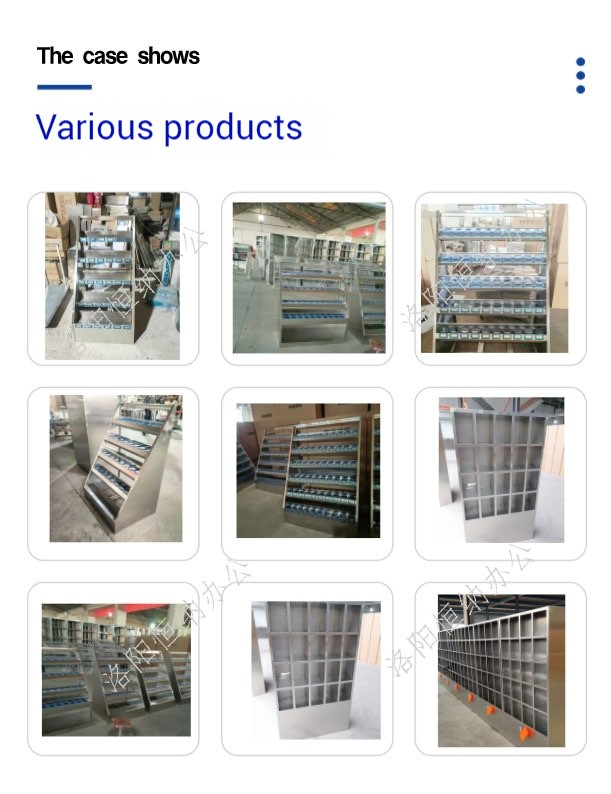
A cabinet that closes tight keeps dust out, but it also keeps moisture in. Bottles that go in slightly damp stay damp, and in warm gym air that is an invitation for mildew. Stainless steel itself is non-porous — it does not hold moisture the way wood or board does — and a steel cabinet left slightly open or with natural airflow between compartments dries out far faster than a sealed wooden cupboard. Some of our customers run the unit as a bottle drying rack: bottles stay in their slots overnight, air moves through, and the stainless surface dries without rust spots. Our 25-compartment cabinet uses open compartments with individual shelves, so air moves through instead of pooling.
Mistake 3 – One shared bin where bottles mix up
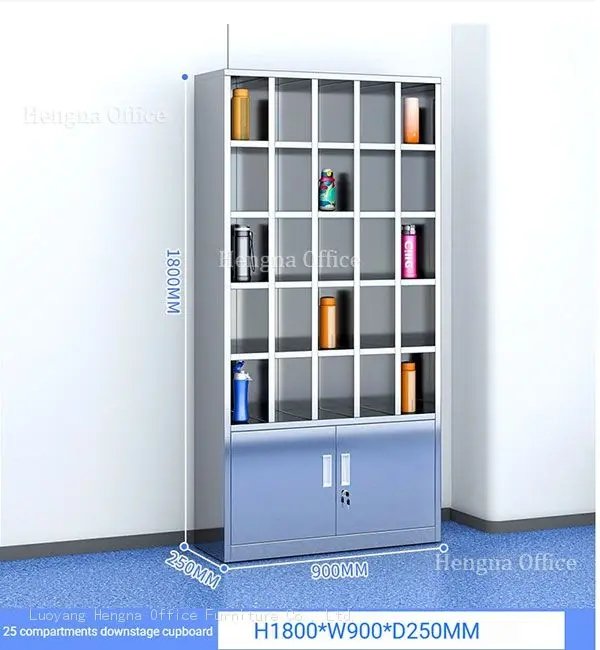
The budget setup — a big tub everyone throws their bottle into — works for about a week. Then bottles get grabbed by the wrong person, lids fall off, and someone’s expensive insulated bottle gets scratched by someone else’s metal one. Separate compartments fix this without anyone having to label anything — each regular user gets a slot, and there is no guessing whose is whose. That is why our standard model has 25 individual compartments rather than open shelving.
Mistake 4 – Shelving that cannot handle a damp floor area
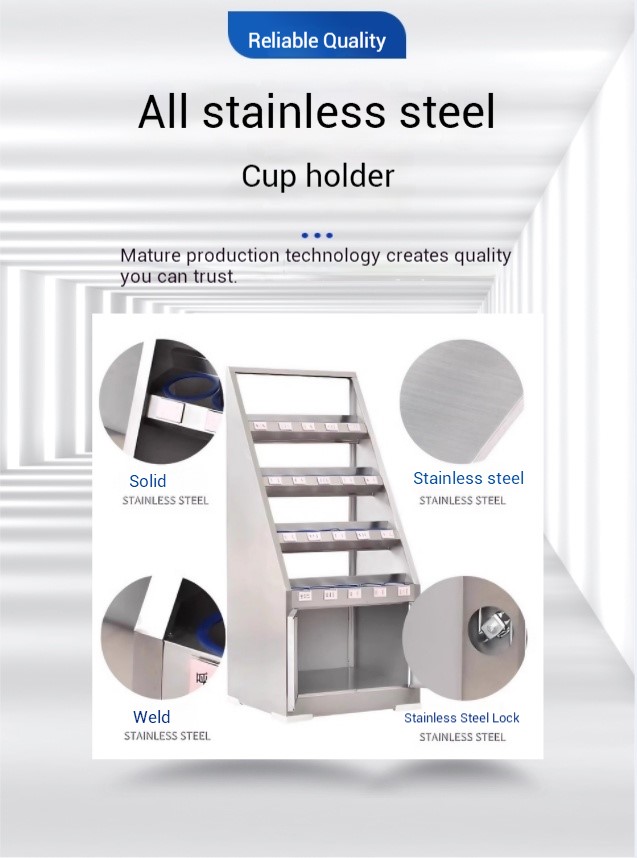
Break rooms and gym corners are damp by nature — spills, condensation from cold drinks, wet shoes. A rack made of painted particleboard or thin coated tube will rust and swell where the coating chips. Stainless steel was chosen for this product line for exactly that reason: it is the material that does not need repainting and does not rust through where it gets knocked. The body, the shelves and the lock are all stainless on the model we ship. Welded joints rather than bolted-on brackets mean there are fewer places for water to sit and corrode.
Mistake 5 – Storage without a lock
It sounds small, but unlocked bottle storage disappears in shared spaces. Gym members and staff both “borrow” bottles, and once one goes missing the whole system falls apart. A cabinet with a stainless steel lock — one key, or a set of keys for the facility manager — changes the dynamic completely: people trust that their bottle is where they left it. Our cabinet carries a stainless steel lock as standard.
Mistake 6 – Buying for the bottles, not for the floor space
People measure bottle height and forget to measure the room. A tall, narrow cabinet is the shape that works in a break-room corner, behind a door, or against a gym wall where a wide unit would block traffic. The model we build is H1800 × W900 × D250 mm — 250 mm deep is about the depth of a standard bottle, so it holds a lot of bottles while taking up very little floor. Vertical space is free; floor space is not.
What We Actually Build
Here is the specification of our standard stainless steel water bottle storage cabinet:
| Item | Specification |
|---|---|
| Compartments | 25 individual slots |
| Dimensions | H1800 × W900 × D250 mm |
| Material | Stainless steel body, shelves and lock |
| Construction | Welded joints, no bolted brackets |
| Drip tray | Included under bottle rows (depth confirm in the quotation) |
| Locking | Stainless steel lock with keys |
| Custom options | Size, color and compartment count on request |
Every unit ships flat-packed for container shipping, and assembly is simple enough for one person with basic tools. If you need a different width, a different number of compartments, or a custom height to fit under a window, send the dimensions — the factory handles cut-to-size work regularly.
How It Compares to the Alternatives
| Setup | What happens after 6 months of daily use |
|---|---|
| Open plastic shelf rack | Puddles on shelves, bottles roll and fall, no lock, looks untidy |
| Wooden or board cabinet | Swelling at the bottom, mildew smell, paint chips at corners |
| One shared bin or tub | Bottles mix up, lids lost, scratched bottles |
| Stainless steel drip-tray cabinet | Shelf stays dry, bottles in fixed slots, lock keeps them in place, wipe-clean surface |
FAQ
How many bottles does this cabinet hold?
The standard model has 25 compartments. If you have more users, tell us the headcount — we can build higher or add a second unit side by side.
Will the drip tray fill up?
It catches runoff from damp bottles, not from pouring. In normal use it holds what a shaken bottle leaves behind, and it is easy to lift out and rinse. If your space deals with genuinely wet bottles all day, mention it when you order — we can quote a deeper tray. Tray capacity should be confirmed in the quotation.
Is stainless steel really necessary for a bottle cabinet?
For a space where bottles are stored damp, yes. Stainless does not absorb water, does not need paint to stay rust-free, and wipes clean in seconds. A painted steel or board cabinet will work in a dry room, but the moment water is involved, stainless is the material that does not degrade.
Can this be used for cups and mugs as well?
Yes — many customers use it as a cup holder cabinet. The same unit works for mugs, tumblers, shaker bottles and water bottles. If your main item is short cups rather than tall bottles, we can adjust the shelf spacing so nothing is wasted.
Ordering and Shipping
We are a factory in Luoyang Pangcun, Henan — the steel furniture industrial zone — and we sell directly, not through trading companies. Minimum order is one unit, so you can test one cabinet before committing to a full facility rollout. Quotations are usually sent within 24 hours; for lead time, shipping cost and tray specifications, confirm in the quotation. OEM work is available: custom dimensions, your logo, and your choice of finish.
If you are fitting out a gym, office, school or clinic and want to see the cabinet before you order, ask for photos and the dimension drawing. We will send both.