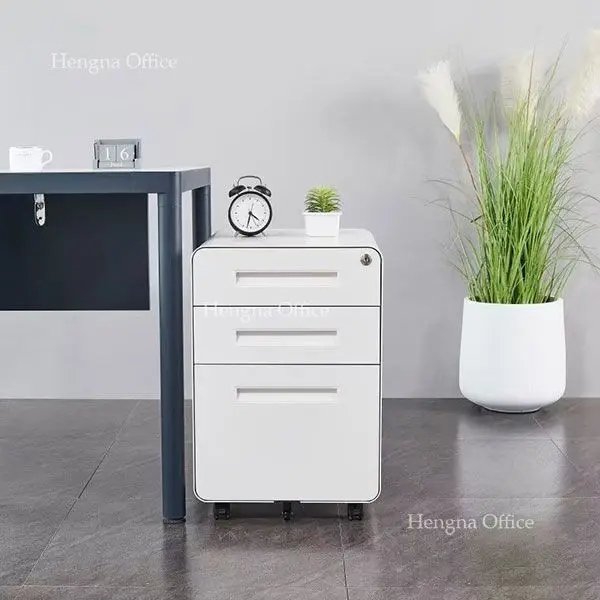
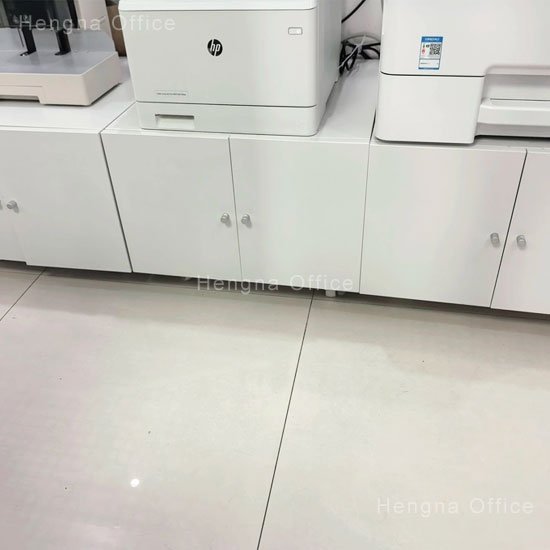
Steel Printer Cabinet for Medical Office — Heavy Duty, Locking Casters, Matte White, Floor Standing
The Medical Office Has a Different Printer Problem
In most offices, a printer is a convenience.
In a medical office, a printer is infrastructure.
Medical practices print patient intake forms, insurance claims, lab reports, prescription labels, and appointment reminders — sometimes hundreds of pages per day. The printer is not in a back room. It is near the front desk, or in a procedure room alcove, or beside the nursing station.
This means it sits on a countertop that was designed for something else. It means the countertop gets covered. It means the staff reaches across the printer to grab forms. It means toner boxes stack on the floor beside it.
The Hengna medical office printer cabinet was designed for exactly this environment: space-constrained, mobility-conscious, cleanliness-focused, and used by multiple staff members throughout the day.
Why Medical Practices Need a Dedicated Printer Cabinet
Countertop space is premium.
Medical office countertops need to be clear for patient interaction — forms, devices, samples. A printer sitting on that counter is a liability. Moving it to a dedicated stand frees the entire surface.
Mobility matters for cleaning.
Medical offices clean floors under and around equipment regularly. A printer that sits on the counter cannot be moved for cleaning. A printer on a cabinet with locking casters can be rolled aside in seconds, the floor cleaned, and the unit rolled back.
Multiple users, one station.
A medical assistant, a front desk clerk, and a nurse practitioner might all use the same printer. A cabinet at a comfortable standing height — rather than a countertop at hip level — means faster, more comfortable access for everyone.
Supplies need to live close by.
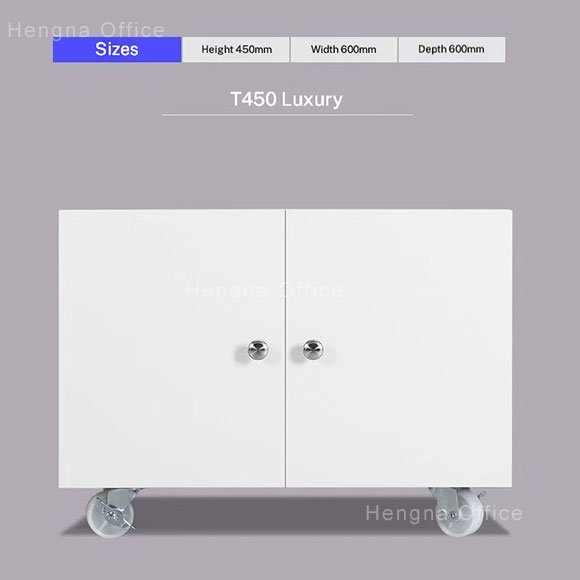
Toner cartridges, label rolls, and form paper should be within arm’s reach of the printer, not in a supply closet across the hall. The Model 2 (600mm tall) or Model 1 (450mm tall) both provide that close storage.
Steel Printer Cabinet for Medical Office — Heavy Duty Specifications
| Specification | Detail |
|---|---|
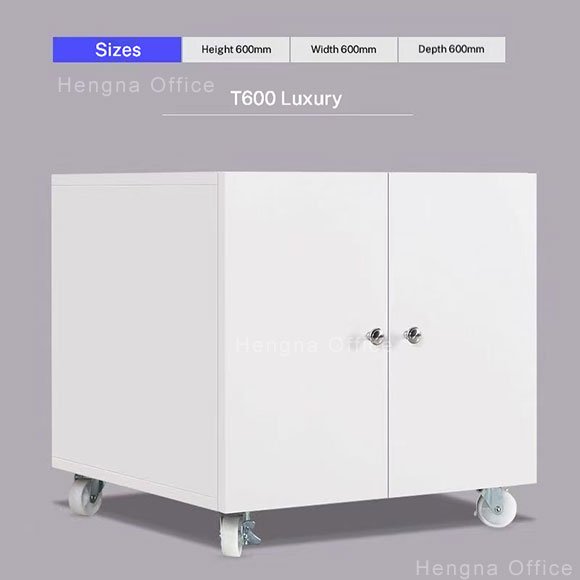
| Available models | Model 1 (H450mm) or Model 2 (H600mm) |
| Width | 600mm |
| Depth | 600mm |
| Top load | 80KG |
| Total structural load (Model 2) | 70KG including contents |
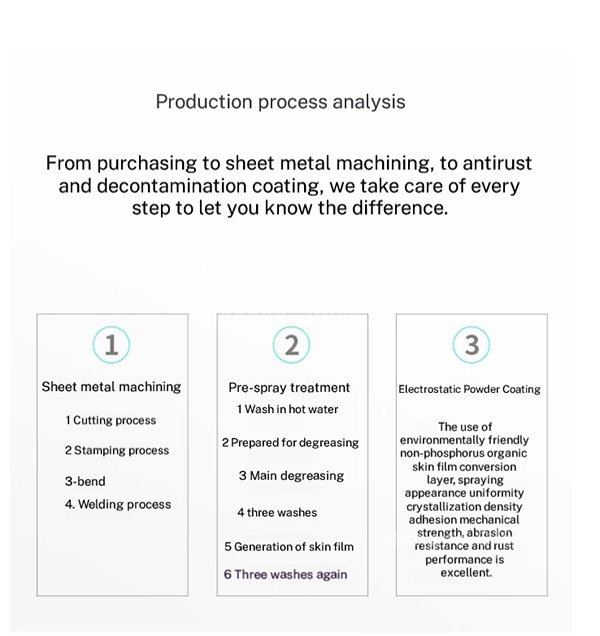
| Finish | Matte white powder coating |
| Steel grade | Baosteel Grade-1 cold-rolled steel |
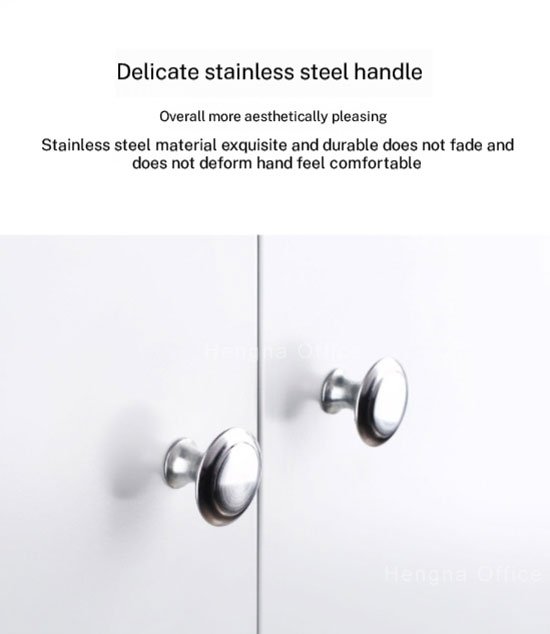
| Handle | Brushed stainless steel |
| Casters | Heavy duty industrial, brake lock |
| Edge guards | Anti-slip on all shelf surfaces |
How Medical Practices Use the Hengna Cabinet
Use Case 1 — General practice, 3-provider clinic
Two printers: one for patient forms near the front desk, one for clinical notes near the nursing station. Each printer sits on a Model 1 cabinet. Toner cartridges and label rolls live on the lower shelf. The countertop that previously held the printer is now used for patient check-in procedures.
Use Case 2 — Dental office, 4-op practice
The main printer is a high-volume multifunction unit. It sits on a Model 2 — tall enough for a full box of copy paper beside it, plus the adjustable shelf for toner and patient forms. The casters let the cleaning staff move the unit 30cm away from the wall during weekly floor cleaning.
Use Case 3 — Physical therapy clinic
A single Model 2 serves as the central document station. Patient intake forms, insurance copies, and therapist notes all print from this one machine. The cabinet stores a week’s supply of paper and toner in the lower bay. Staff no longer interrupt their workflow to walk to a supply closet.
Why Matte White Works in Medical Environments
Medical offices prioritize cleanliness and a neutral visual environment. The Hengna matte white finish supports both:
- White and light gray are standard in medical office design — the cabinet blends in without visual contrast
- The powder coating surface wipes clean with standard medical-grade disinfectants (test a small area first with harsh chemical disinfectants)
- The brushed stainless steel handle resists bacterial adhesion better than unsealed wood or porous materials
- The anti-slip shelf guards prevent items from sliding — important in high-traffic areas where the cabinet might be brushed against
caster Mobility and Safety in a Clinical Setting
The locking casters on Hengna printer cabinets serve a specific purpose in medical environments:
Daily use: Lock the casters when the cabinet is in its operational position. The brake locks both wheel rotation and swivel — the unit does not roll or shift when someone brushes against it.
Cleaning protocol: Unlock both brakes, roll the cabinet to an adjacent position, clean the floor and wall behind it, roll it back, and re-lock.
During patient care hours: Keep brakes locked. Brief the staff on the two-step lock/unlock procedure — press down to lock, lift the lever to release.
The casters are industrial-grade. They are rated for continuous use on hard floors (tile, linoleum, vinyl composite). For carpeted medical office areas, the caster may show slightly more resistance when unlocked — this is normal and does not indicate a defect.
Real User: Pediatric Practice
“We moved our printer onto a Hengna cabinet six months ago. The biggest benefit was the countertop — our front desk finally has a clear surface for patient check-in. The kids’ toys are on that counter now.”
— Dr. Amanda R., Pediatrician, Chicago, IL
“The staff loves that they can just roll it aside to sweep. We didn’t realize how much dust was building up behind the printer until we moved it.”
— Dr. Amanda R.
Frequently Asked Questions
Q: Can I use this in a sterile procedure room?
A: The Hengna cabinet is designed for general medical office environments. For sterile procedure rooms, consult your facility’s compliance guidelines regarding equipment surface materials. The steel construction and powder coating are wipeable with standard disinfectants, but the unit is not classified as medical-grade equipment.
Q: Does the matte white coating hold up to disinfectant sprays?
A: The powder coating is resistant to standard medical disinfectants. For bleach-based or high-pH disinfectant products, test on a small area first. Rinse and dry after cleaning with harsh chemicals to prolong coating life.
Q: Is the Model 2 tall enough to be a standing-height workstation?
A: At 690mm, the Model 2 top platform sits at counter-height for most users in a standing position. If you need standing-height access, this model is the better choice. The Model 1 at 450mm sits at mid-shin to knee level — better for wheelchair-accessible workstations.
Q: Can I store HIPAA-controlled documents in the cabinet?
A: The standard cabinet does not include a locking door. If you need secured storage for sensitive documents, custom locking configurations are available on bulk orders.
Q: How do I clean the brushed stainless steel handle?
A: Wipe with a soft cloth and warm water. For stubborn marks, use a small amount of isopropyl alcohol on a cotton swab. Do not use abrasive scrubbers.
Q: What is the lead time for a single unit order?
A: Standard lead time is 7–15 business days. Expedited shipping available on request.
Which Model for Your Medical Practice?
| Practice Type | Recommended Model | Reasoning |
|---|---|---|
| Single-doctor general practice | Model 1 (H450mm) | Desktop printer, lighter duty |
| Multi-provider clinic | Model 2 (H600mm) | Paper storage, shared use |
| High-volume printing (claims, labels) | Model 2 (H600mm) | Adjustable shelf for supplies |
| Wheelchair-accessible station | Model 1 (H450mm) | Lower platform for seated access |
| Reception area copy station | Model 2 (H600mm) | Standing-height, high storage |
Ready to Equip Your Practice?
A dedicated printer cabinet is a small investment that pays back in freed countertop space, improved staff workflow, and a cleaner, more organized office environment.
If your medical practice has been managing around a printer on a countertop, it is time to move it to where it belongs.