Vented PP Acid and Alkali Cabinet | Lockable Corrosive Storage with CE Certification
Walk into any lab that stores hydrochloric acid, sulfuric acid, or sodium hydroxide, and the storage cabinet tells you more than the safety poster does. Painted steel units develop blisters where vapour has eaten through the coating. Wooden cabinets swell and stain. The drawers and hinges fail first, then the floor of the cabinet, and eventually someone has to explain why a bottle of concentrated acid is sitting on an open shelf.
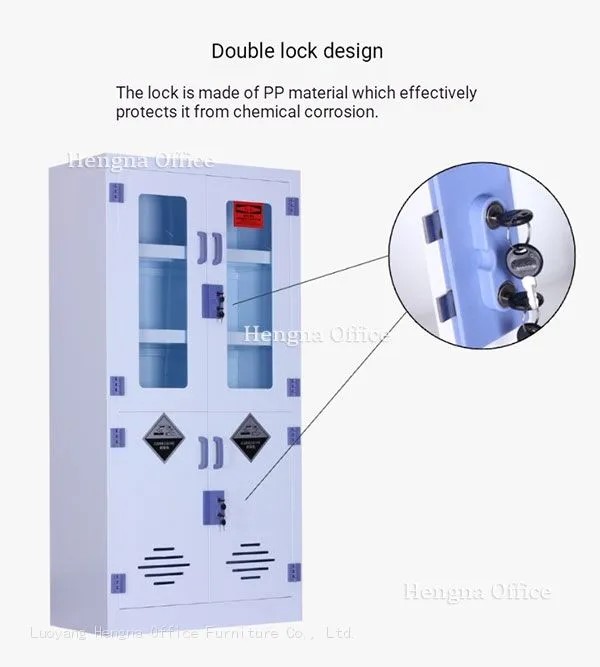
A vented PP acid and alkali cabinet answers that problem differently. The body, shelves, handles, and hinges are all polypropylene — a material that shrugs off acids and alkalis that would destroy painted steel in months. Add a lockable door, louvred vents for vapour control, and CE certification, and you have a storage unit that meets the questions lab managers actually ask: what material survives corrosive chemicals, how do I keep it secure, and what does compliance look like.
Why Vented Storage Matters for Corrosive Chemicals
Corrosive liquids do not stay in the bottle. Acids like HCl give off vapour that rises, condenses, and attacks whatever is above them — shelf edges, the cabinet roof, hinges, and the metal frame of an ordinary locker. In a room with poor airflow, that vapour hangs around the cabinet door and corrodes the hardware first.
That is where the vented design earns its place. The cabinet body includes louvred vent openings that let vapour escape instead of pooling inside. In labs that run an exhaust system, the vents can be connected so fumes are pulled out actively rather than left to settle. Glass-door versions of the same cabinet let staff check stock levels without opening the door and releasing vapour into the room.
For buyers comparing options, the practical test is simple: does the cabinet breathe, or does it seal everything inside until you open the door? If your lab stores corrosive reagents daily, breathing matters.
What You Get: Vented PP Acid and Alkali Cabinet Specifications
| Feature | Specification |
|---|---|
| Material | PP (polypropylene) — body, shelves, handles, hinges |
| Available sizes | 2, 4, 12, 15, 22, 60, 90 gallon; 200L drug-cabinet series |
| Door style | Single door, double door, glass door, louvred vent options |
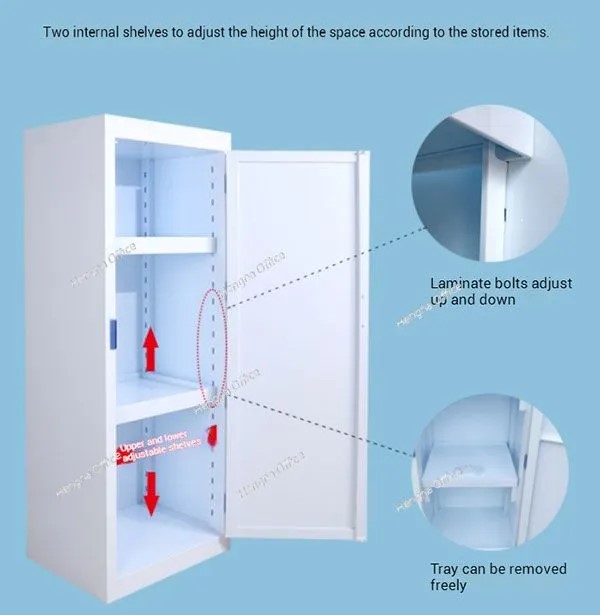
| Shelves | Adjustable, leak-proof tray design with raised edges |
| Locking | Lockable doors for controlled access |
| Certification | CE certified |
| MOQ | 1 unit; OEM/ODM available (logo, packaging, manual) |
| Lead time | 7–15 days standard, 20–30 days customised |
| Warranty | 1 year, free replacement parts for non-manufacturer faults |
Choose the size by what you actually store, not by what looks impressive. A school prep room handling teacher-mixed reagents fits a 4- or 12-gallon unit. A hospital pathology lab with formalin and xylene needs a mid-size cabinet with a glass door. An industrial QC lab holding drums of standard solutions should look at 60- or 90-gallon double-door models. The leak-proof shelves with raised edges matter most in the small units, because that is where bottles get knocked over during quick dispensing.
PP vs Painted Steel vs Wood: Which Cabinet Survives
| Comparison | PP acid-alkali cabinet | Painted steel cabinet | Wooden cabinet |
|---|---|---|---|
| Resistance to strong acids | PP itself is corrosion-resistant | Chips and rust where coating is damaged | Absorbs and rots |
| Resistance to strong alkalis | PP handles alkalis well | Coating bubbles under alkali | Swells, stains |
| Typical service life in corrosive use | 5–8+ years in labs | Rust begins in 2–3 years | Distorts within 1–2 years |
| Cleaning | Shelves pull out, rinse with water | Cannot restore once rusted | Cannot be washed |
| Suitable for corrosive chemicals | Yes | Non-corrosive only | No |
The short version: a painted steel cabinet is fine for clean office storage and unacceptable for a corrosive-chemical room. Wood is worse. A PP cabinet is built for the specific job of holding acids and alkalis, which is why lab managers who have already replaced one rusted steel unit rarely go back.
Locking, Labelling, and What Compliance Actually Means
Security on a chemical cabinet is about controlled access, not secrecy. A lockable door keeps reagents out of reach of untrained staff and students, and it supports the two-person rule some labs apply to highly hazardous chemicals. The cabinet also carries a CORROSIVE warning label, so the hazard is visible even from a distance.
On the compliance side, one thing matters more than anything: use regulations as guidance, not as a claim. Regulations such as OSHA (United States), COSHH (UK), and WHMIS (Canada) set expectations for how corrosive chemicals should be stored — ventilation, secondary containment, labelling, and access control. A well-built cabinet with vents, a lock, a leak-proof tray, and hazard labelling helps a lab meet those expectations. CE certification confirms the cabinet itself meets European conformity requirements for the product category.
If you are responsible for choosing a cabinet, read the local rules for corrosive storage, check what your auditor will look at, and buy a unit that supports each point rather than hoping a fancy name covers it.
How to Choose the Right Vented PP Cabinet
- Size to your reagent list: count the bottles you keep out, add room for the next year, then pick the next size up. It is cheaper than re-ordering.
- Match the door to the room: glass door for frequent checks, solid door for high-security areas, louvred vents where exhaust connection is available.
- Check the shelves: leak-proof trays with raised edges are the difference between a small spill and a floor cleanup.
- Confirm the lock: lockable doors with keys that do not interchange support two-person control.
- Ask about certification and OEM: CE certification documents, custom logo printing, and custom packaging matter for resellers and institutional buyers.
Frequently Asked Questions
How long does a PP acid cabinet last?
In normal laboratory use with corrosive chemicals, PP cabinets commonly serve 5–8 years or more. Painted steel in the same room typically begins rusting within 2–3 years, which is why replacement buyers usually switch materials.
Can I get the cabinet with a glass door?
Yes. The 200L series includes glass-door versions and combination designs with upper viewing windows and lower solid doors, so you can check stock without opening the door.
Do I need to connect the vents to an exhaust system?
Not always. The louvred vents allow vapour to escape naturally. If your lab already has an exhaust line, the cabinet can be connected to pull fumes out actively. Check your room ventilation and local rules before deciding.
Is a 1-unit order really accepted?
Yes. MOQ is one unit, so a single lab or clinic can order directly, and OEM/ODM services are available for resellers who need their own branding, packaging, or manuals.
Ready to Replace the Cabinet That Is Rusting?
If your storage room has a steel cabinet with bubbled paint, stiff hinges, or a corroded base, you already know the answer. Send us your reagent list and the space you have, and we will recommend the right vented PP acid and alkali cabinet size, confirm CE documentation, and get back to you with a quotation within 24 hours.