Smart Locker ROI for Gyms: 8 Questions to Ask Before You Buy
Ask any gym manager what breaks about a locker room and you will hear the same two answers: members lose keys, and staff spend their evenings chasing them. A mechanical locker with a padlock has no way to know who used it, what was left inside, or when the key went missing. The member waits, the front desk calls, and the whole queue slows down.
Smart lockers remove the key from the problem — members open with a fingerprint, a printed barcode, a PIN, or a card, and the system logs every use. But the market is full of suppliers selling a box with a screen, and the difference between a locker bank that works and one that becomes a maintenance headache is decided before you order. Here are eight questions to put to any supplier before you commit.
1. Can the lock types be mixed in one bank?
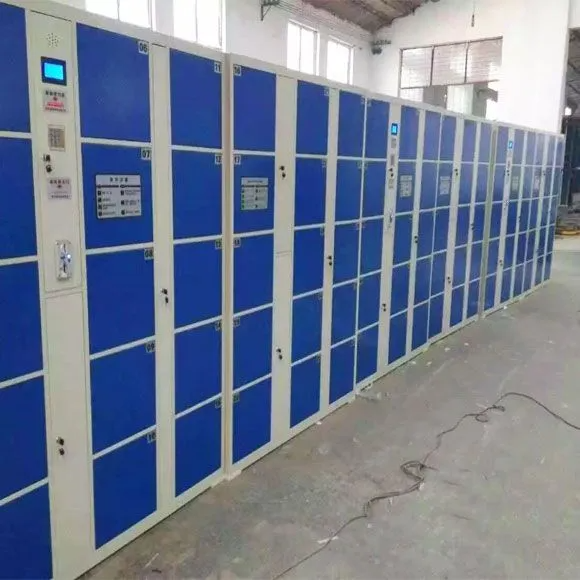
A gym rarely wants one single access method. Members who come daily are fine with a fingerprint; a drop-in visitor is better served by a barcode printed at the machine; a group fitness class may just want a quick PIN. Ask whether the supplier can mix lock types on one system — our own banks, for example, run a main cabinet with a control board and attach slave cabinets with different locks, all managed as one unit. A supplier who can only offer one lock type per order is already limiting how your locker room can be used.
2. What happens when a key or code is lost?
This is the question that pays for itself. A mechanical bank means replacing or drilling locks when keys vanish, and taking compartments out of service while you wait. An electronic bank should have a mechanical emergency release for the administrator — so the manager can open any door without calling a technician — plus the option of a backup power connection for outages. Ask the supplier to show you the emergency-opening procedure in the manual before you sign, not after the first incident.
3. What happens during a power cut?
Locker rooms do not choose when the power fails. Confirm that the system keeps its memory through an outage and that the emergency mechanical key opens doors without electricity. Some units accept a backup power port; ask whether that is standard or an extra. If the supplier cannot describe the power-loss behaviour clearly, that is an answer in itself.
4. Is the whole bank controlled by one system?
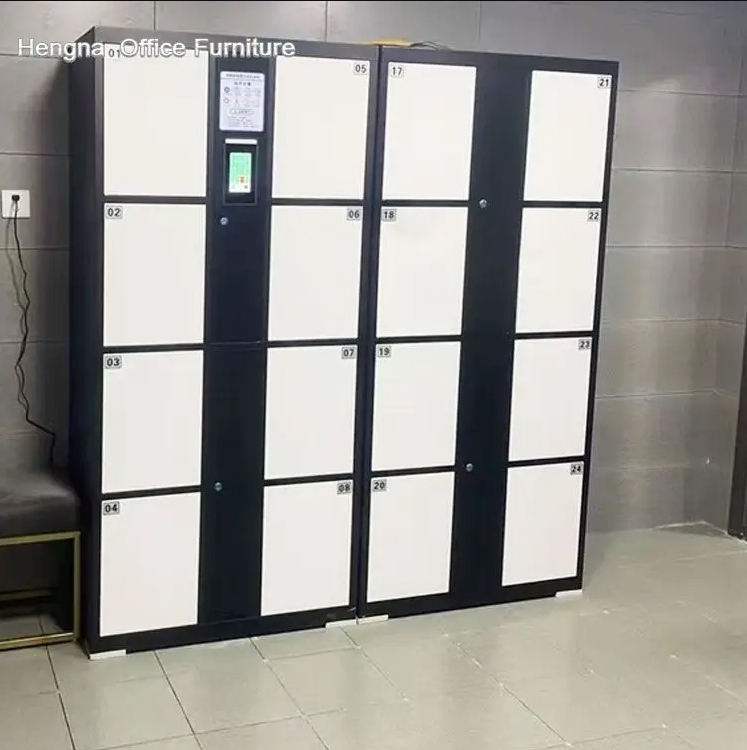
Banks of 12, 24, 36 or 48 doors should be one logical system — a main cabinet plus slave cabinets — so usage logs, printer output and administration live in one place. Independent cabinets bolted together are not the same product, however similar they look. Ask how many cabinets one control board drives and how expansion works when you add doors next year.
5. Does it arrive ready to plug in?
Electronic lockers with wiring, controllers and printers are not a DIY weekend project for your maintenance guy. Our units are assembled, wired and tested at the factory, then packed with the controller protected, so the bank arrives and runs after a plug-in. Ask specifically: does the quote include factory assembly and testing, or is on-site installation by a technician required?
6. Will it speak your members’ language — and your voltage?
Voltage and language are the two details that look trivial until they block a launch. Confirm the unit supports your local voltage (110V or 220V, to be confirmed per order) and that the on-screen text, voice prompts and instruction manual can be localised. A gym in Dubai, a club in Bangkok and a chain in Mexico all buy from us with different voltages and different languages on the same cabinet.
7. What exactly does the warranty cover?
Electronic lockers fail most often in the controller and the electronic locks — exactly the parts cheap suppliers exclude. Our standard cover is a one-year warranty with free replacement of the control board and electronic locks within the first year. Ask for the warranty terms in writing and check that the electronics are covered, not just the steel body.
8. How do we validate the product before a full bank?
A single sample unit is the cheapest insurance in this purchase. Ask about sample orders, whether quotations come within 24 hours, and what the realistic lead time is — standard units 7-15 days, customised units 15-25 days in our case. A supplier who hesitates on samples is selling you a promise instead of a product.
Building Your Own ROI Case (No Magic Numbers)
You will see claims about “cutting staff time by X%” — treat them as marketing until your own numbers confirm them. Here is the framework to run yourself, then confirm the figures in the quotation:
- Lost-key cost: average cost of replacing one mechanical lock + the compartment days it sits out of service + the staff minutes spent re-issuing keys. Multiply by how many keys you lose a month.
- Staff time: minutes a front-desk or cleaning staff member spends unlocking, re-issuing and chasing keys per day, times your hourly cost.
- Member friction: the queue time when a key is lost at peak hour — harder to put a number on, but your retention team will tell you it is real.
- Now compare: what a smart bank removes from each line. No keys to lose, no waiting for an administrator, usage logged automatically.
That is your ROI case. Any supplier that gives you hard percentages without seeing your operation is guessing at your numbers.
FAQ
How long does a smart locker take to pay back?
That depends entirely on your key-loss rate and staff cost — which is why we built the framework above instead of quoting a figure. Once you share your numbers, we will confirm an estimate in the quotation.
What access method should a gym choose?
For regular members, fingerprint or card access is fast and private. For casual users, a printed barcode is simple and one-time. Most gyms we supply mix the two — fingerprint on the main bank, barcode or PIN on the guest bank.
Can the lockers work with our membership system?
Yes, where the membership platform offers an API. Confirm the integration scope with the supplier before ordering; we have done badge and barcode integrations for gym chains and can advise on what fits your setup.
What do we do with a locker whose member has left?
The administrator opens it with the mechanical emergency release, logs the contents, and resets the compartment for the next member. No locksmith, no drill, no downtime.
Factory Direct, One Supplier for the Whole Club
As the manufacturer of electronic and steel lockers, we build at our plant in Luoyang, China, with CE certification, OEM branding and multilingual interfaces. A gym order is usually a mix — member banks, guest banks, staff lockers — and one factory keeps colour, finish and spares consistent. Send your locker room plan and your numbers; we will come back with the configuration and a quotation within 24 hours.